
 RewindFrom 'White Rabbit' to 'Worst Song Ever': How 'We Built This City' is Remembered Now
Rewind
Accident, Innovation, and Irony: The Story Behind Dire Straits’ "Money for Nothing"
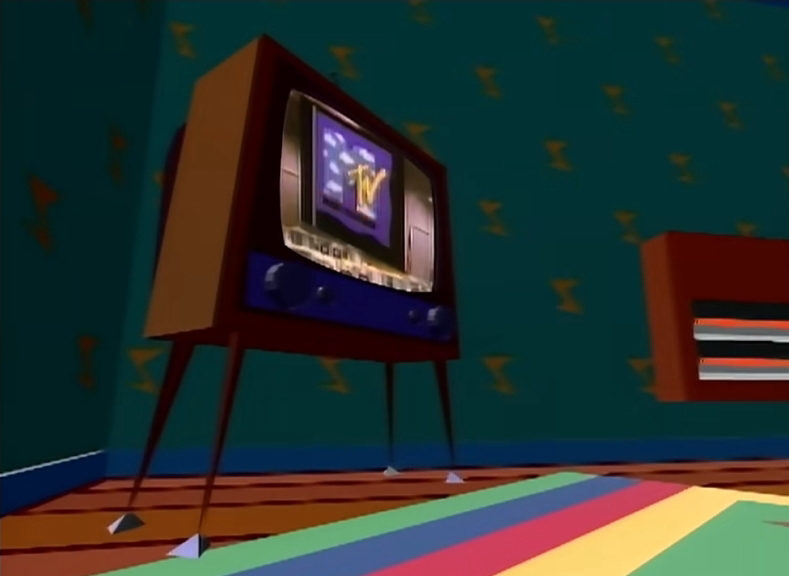
Released on June 28, 1985, Dire Straits’ "Money for Nothing" stands as one of the definitive anthems of the 1980s.
Propelled by an unmistakable opening riff, a pioneering music video, and a massive global rollout via the Brothers in Arms album, the track became a cultural juggernaut. Yet, its journey to the top of the charts was shaped entirely by a series of happy accidents, unexpected collaborations, and creative risks that nearly went unmade.
The song’s genesis had nothing to do with the glamorous lifestyle of rock superstardom. While visiting an appliance store in New York City, frontman Mark Knopfler overheard two delivery workers standing in front of a wall of television monitors broadcasting MTV. Annoyed and resentful, the workers complained about the seemingly effortless jobs of rock musicians, commenting on how they got to "move microwave ovens" and "custom kitchen deliveries" while guitar players made "money for nothing and chicks for free."
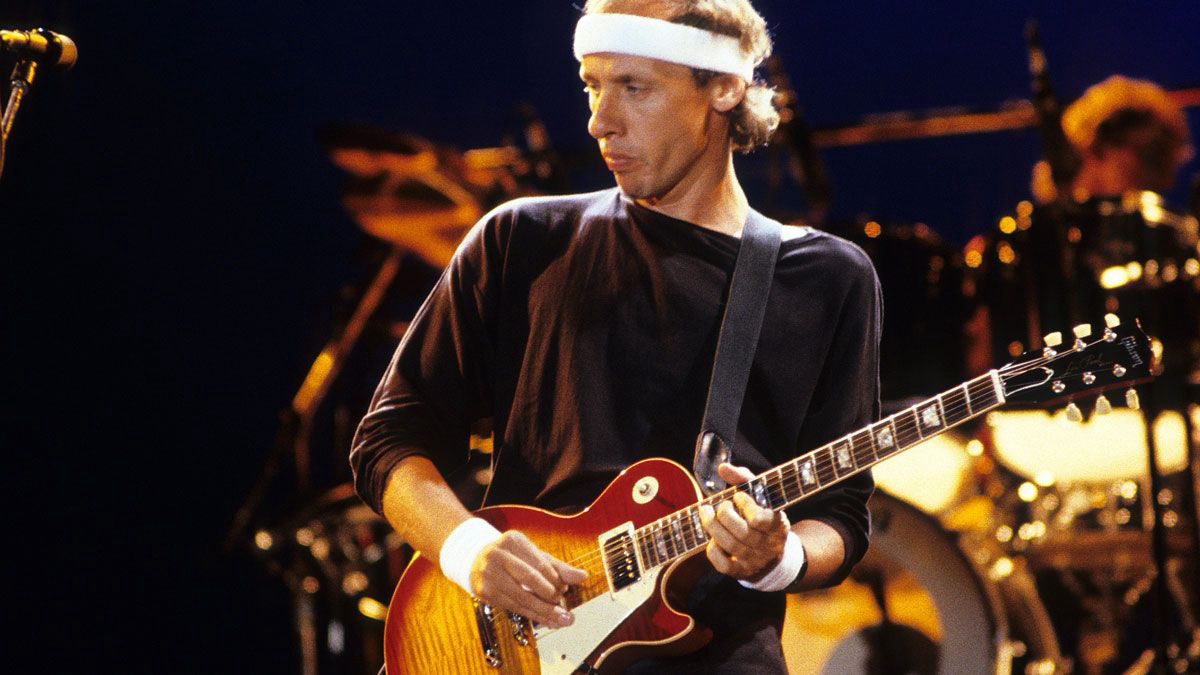 (Photo Credit: Guitarworld.com - Mark Knopfler, frontman and guitarist for Dire Straits)
Instead of dismissing the remarks, Knopfler pulled out a notepad. He realized the complaints offered a fascinating, raw perspective. Rather than writing a standard pop song, he decided to adopt the persona of an ignorant, blue-collar narrator to capture the absurdity of a working-class man venting his frustrations at the television screen.
The track's legendary, crunchy guitar tone, which instantly hooks the listener; was born purely by mistake at AIR Studios in Montserrat. Engineer Neil Dorfsman had left an unconventional arrangement of microphones active overnight on an amplifier setup. When playback began the next morning, the accidental configuration produced a distinctively compressed, mid-heavy crunch.
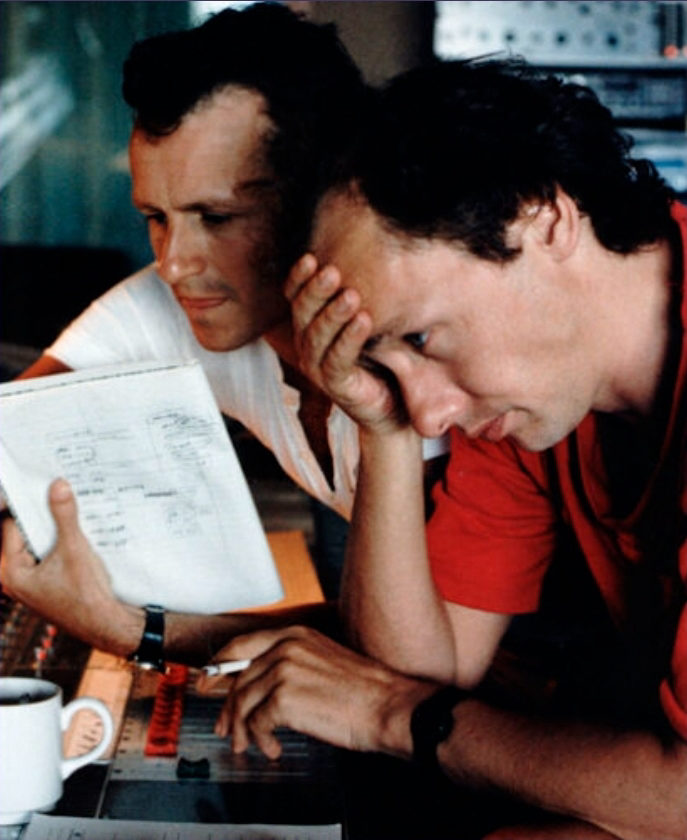 (Photo Credit: NeilDorfsman.com - Music Engineer Neal Dorfsman)
Instead of resetting the equipment to chase a traditional studio sound, Knopfler and Dorfsman immediately recognized its brilliance. That accidental overnight mix became the defining sonic signature of the track.
Adding to the track's star power was an iconic vocal hook that almost happened by chance. Sting happened to be vacationing on the island of Montserrat while Dire Straits was recording. Invited into the studio, the Police frontman contributed the unforgettable falsetto chorus, famously singing "I Want My MTV" to the exact vocal melody of his own hit song, "Don't Stand So Close to Me."
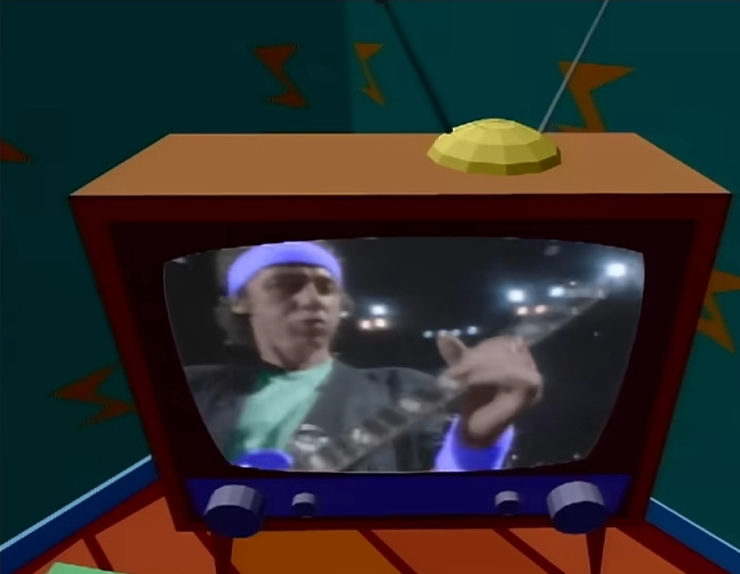 Photo Credit: Money for Nothing, YouTube)
Despite initial hesitation from the band toward leaning heavily into music videos, director Steve Barron convinced them to embrace cutting-edge technology. The resulting video became a historic milestone as one of the earliest examples of 3D computer-animated human characters in media.
Using a Bosch FGS-4000 graphics system, animators Ian Pearson and Gavin Blair pushed the absolute limits of 1980s technology. The blocky, retro-futuristic aesthetic captured the spirit of early computer graphics and dominated MTV airwaves. The video's massive impact culminated at the 1986 MTV Video Music Awards, where it won the inaugural Video of the Year award.
As the song achieved global ubiquity, climbing to number one on the US Billboard Hot 100 and anchoring Brothers in Arms to sell over 30 million copies worldwide; it also sparked significant debate. Critics took issue with the narrator's use of a homophobic slur embedded in the lyrics.
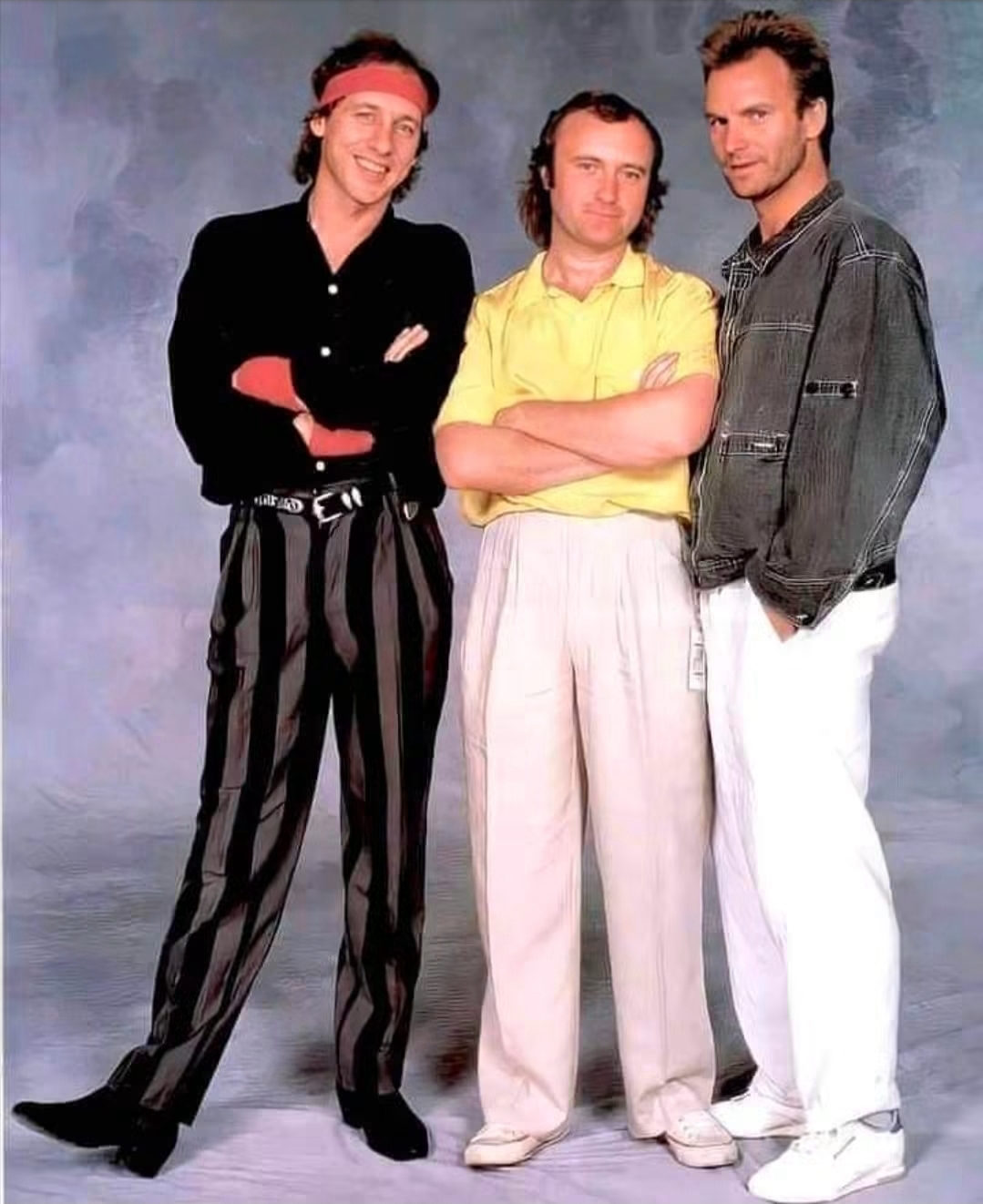
(Photo Credit: Phil Collins - Mark Knopfler, Phil Collins, Sting, 1986)
Knopfler repeatedly defended the track by pointing to its satire and narrative technique, comparing it to Randy Newman’s "Short People", arguing that the lyrics were designed to expose the ignorance of the character, not to endorse his prejudices. Over the decades, radio stations, television networks, and broadcast standards councils wrestled with whether to edit or air the uncensored version, reflecting the ongoing tightrope walk between artistic freedom and offensive language.
Ultimately, "Money for Nothing" transcended its controversies to reshape the sound of 80s rock. Born from an overheard conversation in a New York appliance shop and cemented by studio accidents and technical innovation, it remains a testament to how creative risks can turn unexpected moments into enduring rock history.
(Thumbnail Photo Credit: Money for Nothing, YouTube)
How impactful is this story?
Rate the real-world significance of this reporting.
Loading…
Related stories
RewindFrom 'White Rabbit' to 'Worst Song Ever': How 'We Built This City' is Remembered Now RewindHardcastle's 19: Sampling the Trauma of the Vietnam War
Join the Conversation
Be the first to comment on this story.
Leave a Comment