
The Bureaucratic Trap: How Escambia County’s Quasi-Judicial Rules Silence Citizens
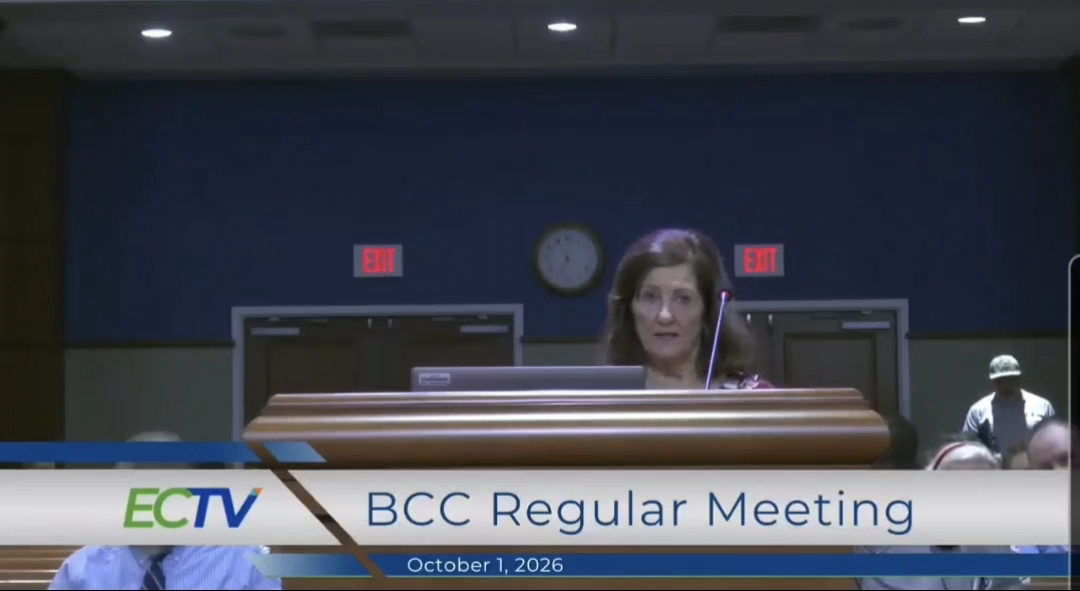
Imagine this: a commercial warehouse is proposed right in the middle of your quiet residential neighborhood. You rally your neighbors, you prepare your arguments about traffic and drainage, and you take time out of your evening to attend the Board of County Commissioners meeting to plead your case.
You walk up to the podium, ready to defend your home, only to be told you aren't allowed to speak. Why? Because you didn't know about a procedural technicality.
This is the reality of Escambia County’s quasi-judicial zoning hearings. The general public simply does not understand the convoluted rules of these proceedings, and it took me a while to understand them, too.
The rule is straightforward, but unforgiving: to speak at the evening commission hearing on a quasi-judicial rezoning, you must first be sworn in and present evidence at the Planning Board meeting, which takes place at 8:30 AM on a Tuesday.
If you miss that morning meeting, you forfeit your right to speak at the final vote. For working families, parents, and everyday citizens, this requirement creates an immediate, systemic barrier.
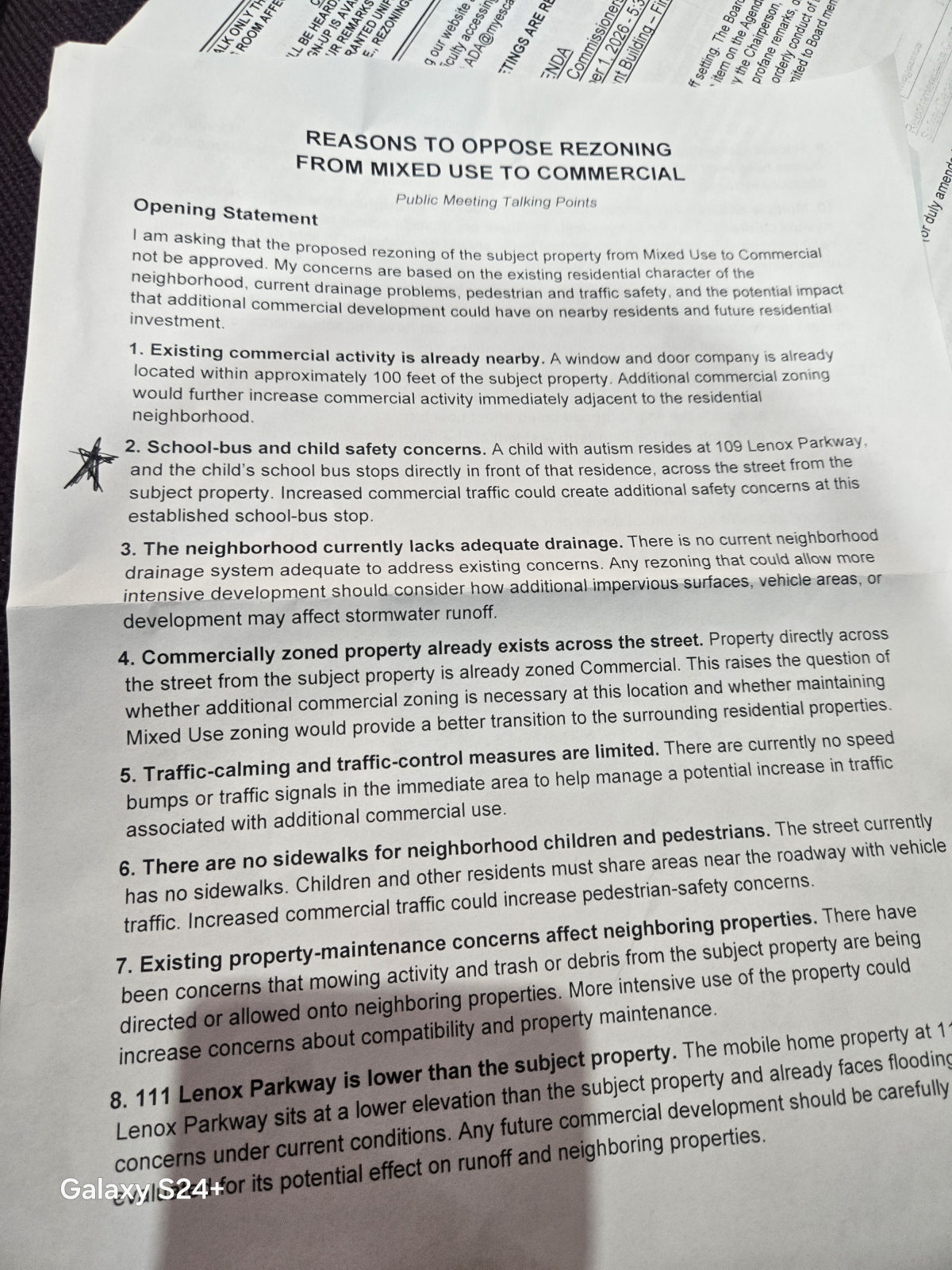 (Lenox neighborhoods collaborative list of concerns for the BOCC partially read by Pepper)
However, local advocate Keith Bowe previously shared an important procedural strategy for navigating this rule. To preserve your legal standing to speak in the evening without having to deliver a presentation with no time to collect evidence to present to the Planning Board, you can state:
"I adopt the views of all future and prior speakers for further consideration."
I used that procedure at the latest Planning Board meeting to preserve my standing. Little did I know how critical it would be.
Last night, I was listed on the paperwork to speak at a quasi-judicial rezoning hearing for 114 Lenox Parkway in District 3. A window and door business was seeking to rezone a former church property in the heart of a residential neighborhood to construct a commercial warehouse.
An entire group of neighbors showed up to ask the board to protect their community. Among them was Nancy Locardo, a 50-year resident of Bayless Court who has spent decades advocating for her neighborhood alongside her late husband through their local Neighborhood Watch.
Locardo took the podium to share the history and deep personal stake residents have in the area.
"This is a residential neighborhood," Locardo told the commission. "I've lived there 50 years in this same house. I've raised my children... and I'm still trying to keep our neighborhood residential."
Locardo and her neighbors pointed out severe existing drainage and flooding problems along Bayless Court and Lenox Parkway, traffic congestion, and safety risks.
But another family who came to advocate for their autistic son, whose school bus stops directly across from the proposed commercial site, found out right before the hearing that they were procedurally barred from speaking because they had not attended the 8:30 AM Planning Board meeting.
A neighbor approached me, asked if I was Pepper, and explained that these neighbors were going to be silenced.
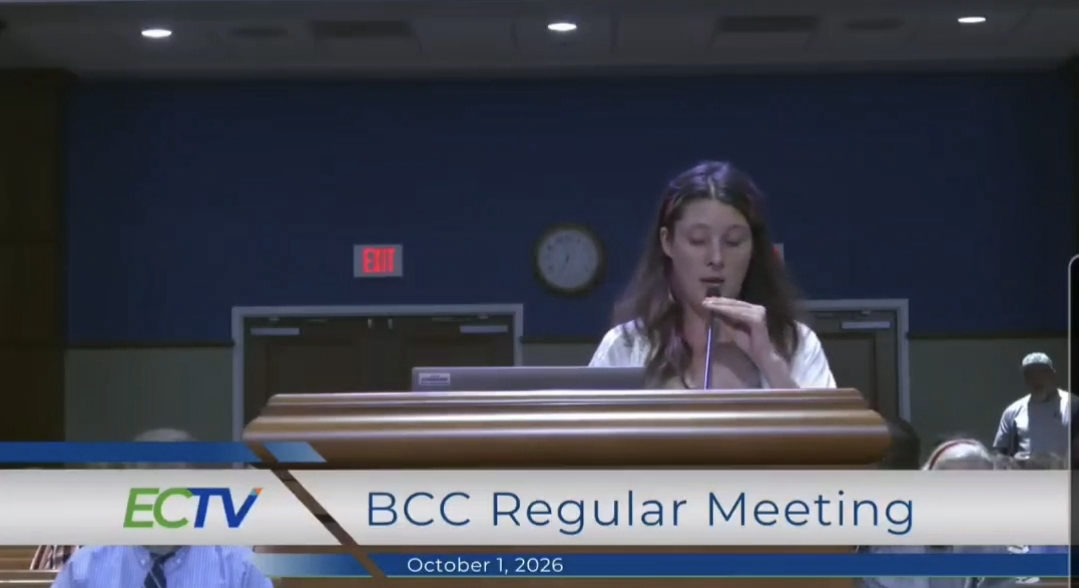 (Pepper Wimer calls out the shame that this family needed a proxy to be heard)
Because I had preserved my standing at the morning meeting, I was able to step up to the podium on their behalf. I read their specific points directly into the official record, detailing the drainage deficiencies, traffic risks, and the safety concerns surrounding the school bus stop.
Because we built a clear factual record, the commission acted to protect the neighborhood. District 3 Commissioner Lumon May commended Locardo's lifelong dedication and spoke out against the lack of community outreach by county staff before moving to deny the rezoning request.
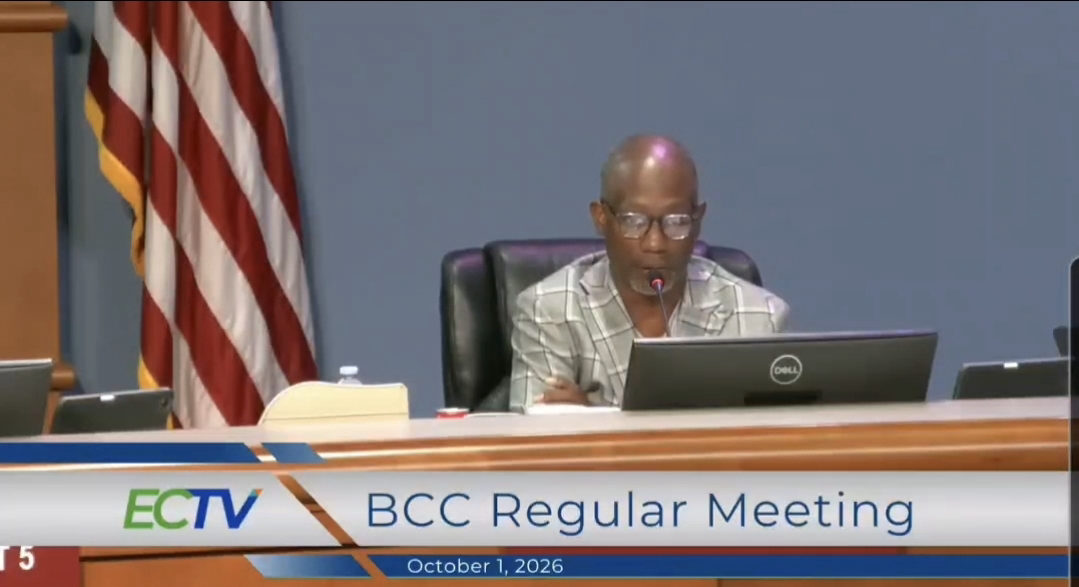 (Commissioner Lumon May motions to deny the rezoning)
"Nancy Locardo and her husband have spent 60 to 70 years of their life preserving and taking care of that neighborhood," Commissioner May stated during the meeting. "This neighborhood has been plagued by issues, and they have stood strong to keep that a strong neighborhood central imprint... If they have questions, and if they have concerns, we should alleviate that."
Commissioner May then officially moved for denial of the rezoning request.
While the neighborhood won this battle, residents should not have to rely on morning procedural maneuvers or proxies just to be heard on issues affecting their own front yards. Until Escambia County reforms its quasi-judicial public input rules to make participation accessible, citizens must continue to look out for one another, learn the procedures, and ensure every voice makes it into the public record.
How impactful is this story?
Rate the real-world significance of this reporting.
Join the Conversation
Be the first to comment on this story.
Leave a Comment