
 Missed MeetingsPublic Notice: Canceled ECUA Meeting Causes Pledge for Clearer Communication
Gas Money Over a Boilerplate Bid: Why ECUA Canceled Tuesday’s Committee Meeting
Transparency isn't just about unlocking chamber doors or posting PDFs online. It is about whether everyday citizens can actually understand the words on the page. When a public process requires digesting hundreds of pages of legal jargon, taking a morning off work, and navigating procedural traps just to earn two minutes at the microphone, the system ceases to be transparent.
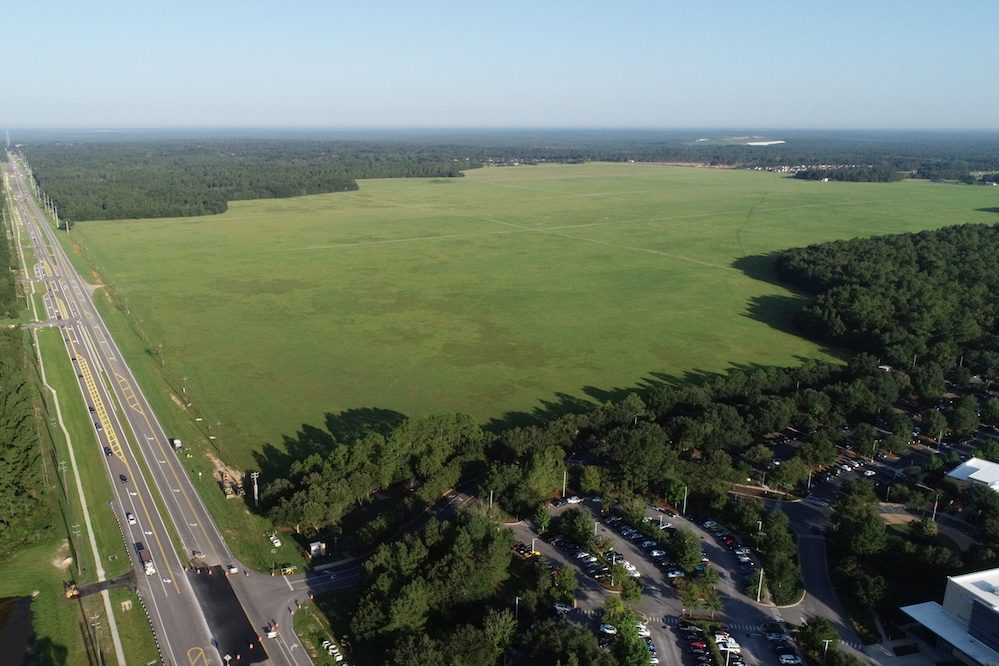
The ongoing Outlying Field 8 (OLF-8) redevelopment in Escambia County is a textbook example of how administrative friction obscures the democratic process.
The barriers begin with scheduling. Escambia County’s Planning Board meets at 8:30 a.m., forcing working residents to choose between their paycheck and their civic voice. This creates a procedural trap specifically for quasi-judicial zoning items, which restrict public comments at the final Board of County Commissioners meetings to residents who already spoke at the earlier Planning Board meeting.
Missing the morning meeting silences your voice at the final vote. The rule is so restrictive that during the seven and a half hour marathon July 7 Planning Board meeting, resident Jason Weidlich had to explicitly state on the record that he was adopting all the views of every preceding speaker just to preserve his legal right to speak later.
 (Photo Credit: Rick's Blog)
The procedural chaos carried over to the August 6 Board of County Commissioners transmittal hearing. The board combined a Future Land Use Map Amendment and a Comprehensive Plan text amendment. Residents are typically allowed three minutes per item, meaning citizens should have received six minutes total. Instead, the board capped public comment at a mere two minutes for both items combined, cutting time down to 33%.
In stark contrast, developers were granted a 25-minute presentation and unlimited time for questions. Residents were given 120 seconds to dissect unannounced zoning changes, while developers held the floor. This rushed process confused the elected officials, with multiple commissioners openly expressing confusion on the dais about what they were voting on, whether it was a transmittal or final vote, and which rules applied.
Florida law requires public documents to use plain language, yet the OLF-8 process consistently fails this standard. While the county might be meeting the bare-minimum letter of Florida’s Sunshine Law by posting documents online, they are entirely failing the spirit of it. Agendas routinely feature dense, multi-hundred-page attachments with zero comparative analysis from staff, posted a mere six days in advance.
Transparency must be active, and without accessibility transparency is damaged. Transparency means scheduling evening meetings so working-class families can access meetings. Providing clear comparative analyses in plain English should be the standard. When a process isn’t clear to the public, or to the elected officials voting on it, trusting the outcome is impossible.
But make no mistake: OLF-8 is merely the loudest, most expensive example of a systemic breakdown in Escambia County. From zoning boards to budget hearings, local governance is being reserved for the privileged few who have the time to decipher jargon and attend Tuesday morning meetings. When bureaucracy functions as a gatekeeper, the public square is essentially closed. Citizens don't just deserve a seat at the table; they deserve a process they can actually understand. Pensacola deserves better.
How impactful is this story?
Rate the real-world significance of this reporting.
Missed MeetingsPublic Notice: Canceled ECUA Meeting Causes Pledge for Clearer CommunicationGas Money Over a Boilerplate Bid: Why ECUA Canceled Tuesday’s Committee Meeting
 PoliticsStroberger Decries ‘Outrage Machine’, Takes Swing at the Public
Join the Conversation
Be the first to comment on this story.
Leave a Comment