
Francesca Yabraian Ready to Usurp Michelle Salzman
Florida House of Representatives Disctrict 1 Race Faces Off Polar Opposite Candiates
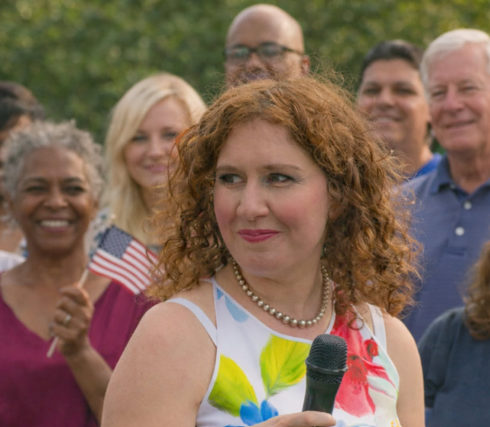
Florida House District 1 Candidate Francesca Yabraian entered politics because of a Gulf War Veteran Bill Florey, who served in the 82nd Airborne Division.
“I will never forget the moment I decided to go into politics,” Yabraian told the PensacolaCitizen.org. “I was standing in his grandmother's garden when Bill handed me a VA letter saying it was “less likely than not” that his cancer was connected to his Gulf War service and exposure near Khamisiyah.”
Florey’s death sparked life in Yabarian, who is running against Representative Michelle Salzman.
“I realized the system that was supposed to serve Bill had failed him,” Yabraian said.
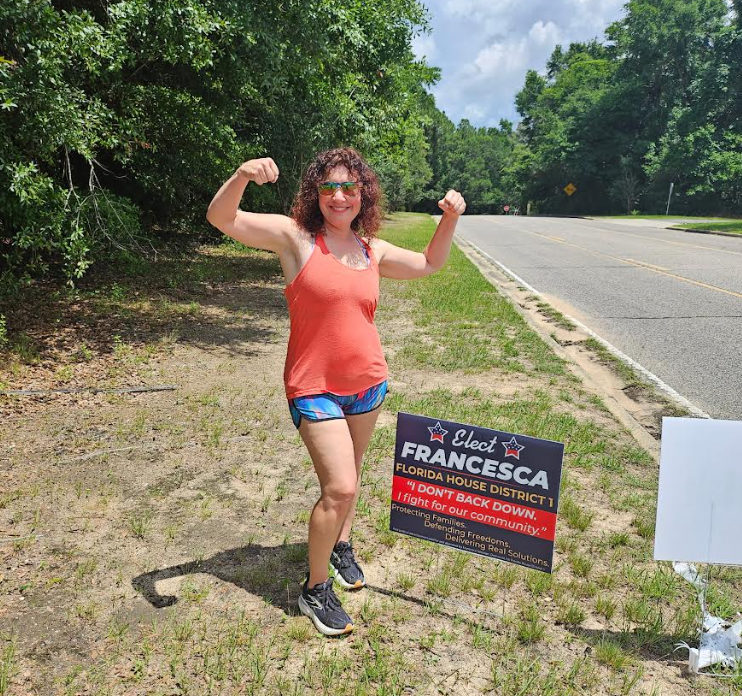 Years later, the system still fails, which is exactly why Yabraian stepped up to the District 1 plate.
“Standing there with my dying friend, I decided I wanted to understand government so I could someday change that system from the inside,” Yabraian said. “I pulled out my cell phone, called the University of Tampa, and asked if I could add Government and World Affairs to my studies.”
The rest is history.
“I kept my promise to him,” Yabrian said. “I later served as the lead researcher for Washington columnist and author Martin Schram's book, Vets Under Siege: How America Deceives and Dishonors Those Who Fight Our Battles. Bill's story appears in that book alongside the stories of other veterans.”
According to Yabraian, two major obstacles stand in the way of standing up to the status quo political machine: money and media.
“I have people tell me privately that they want to support me but worry about their names appearing on campaign finance reports because they do not want my opponent or the political establishment to see them,” Yabraian said. “Then there is media coverage. You can send press releases, policy proposals and op-eds to major local outlets and receive little or no response.”
Too often, no money means no coverage, the candidate said, adding that “hurts voters because they may never hear from candidates who are not backed by Big Tech, Wall Street, developers or major corporations.”
“I campaign differently,” Yabraian said. “I go directly to people, attend government meetings, knock on doors and speak up when something is wrong.”
That she does. Yabraian is seen at nearly every Escambia County Board of Commissioners meeting, Pensacola City Council meeting, and more.
“I will keep fighting for the people of Escambia County,” Yabraian said.
When asked what three things she would change if elected, she said she would repeal the Live Local Act, fund Liberty Free Zones, and ban Flock cameras and AI data centers.
“I want local communities to have meaningful control over zoning, density, and development,” Yabraian said of the Live Local Act. “Housing policy should serve the people who live here, not simply developers and large investors.”
On funding Liberty Free Zones, Yabraian said she wants the state to provide areas where communities can build locally controlled water, wastewater, and power systems and choose to remain AI-data-center-free.
“People should be able to turn on their kitchen faucet and confidently drink clean water. Clean water and reliable infrastructure are basic government responsibilities,” Yabraian said.
Lastly, the candidate would ban Flock cameras and AI data centers, two issues she often fights against at the podium.
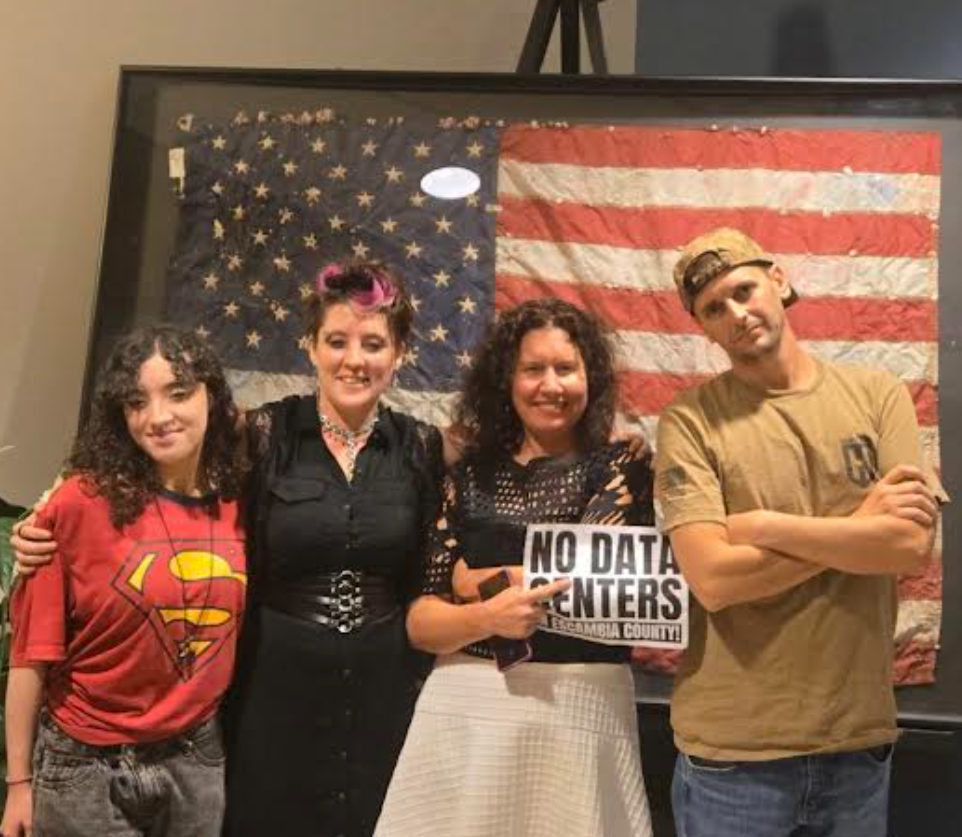 “I support banning both,” Yabraian said. “Flock surveillance raises serious privacy and Fourth Amendment concerns, while massive AI data centers can place enormous demands on water, electricity, land and infrastructure.”
The candidate said technology should serve human beings—not the other way around.
If elected, Yabraian will take a different approach than the incumbent.
“I will listen and not dictate,” she said. “I will hold town halls and actually listen to residents.”
When people tell government they don't want Flock cameras, their representative should listen, Yabarian said, adding, “My opponent has talked about putting ‘guardrails’ on Flock cameras.”
“There are no guardrails around the Fourth Amendment,” she said. “Our community is asking for infrastructure first, and no AI data centers, and Michelle Salzman supports AI data centers.”
As a first-generation American, the candidate said her family's history shaped her view of freedom and government power.
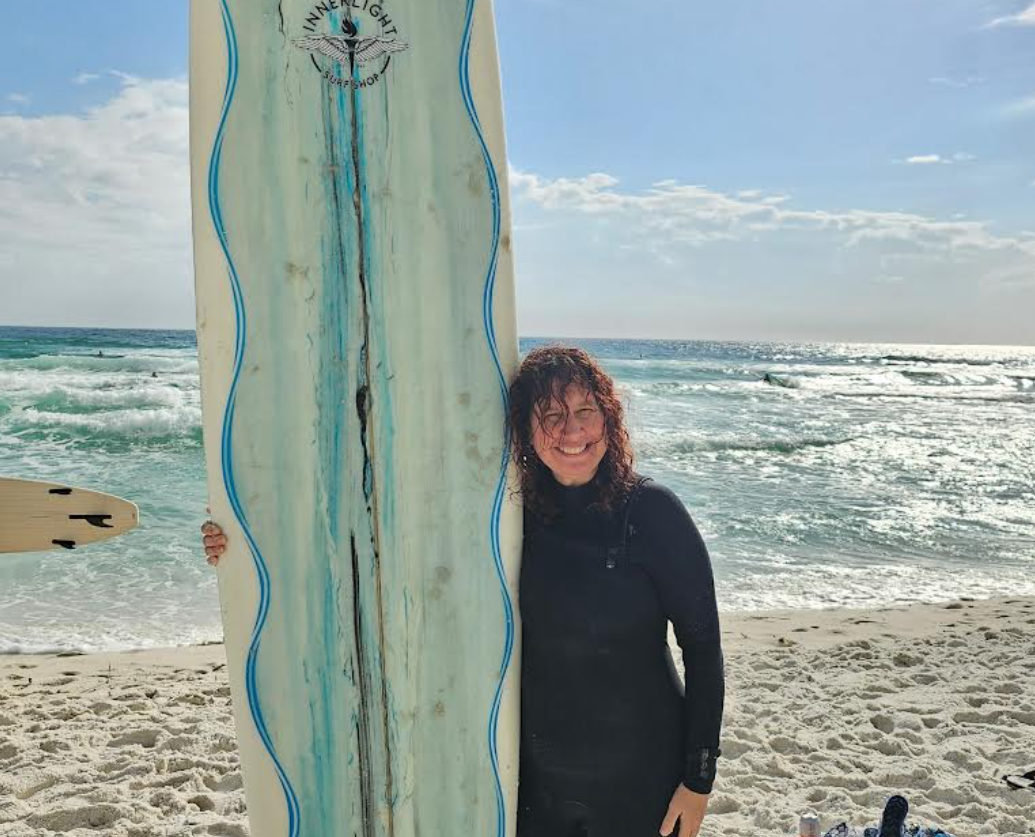 Sometimes people hear the word Democrat and immediately use words like ‘communist,' Yabraian said. “My family knows firsthand what communism, fascism and political persecution look like.”
Her great-grandfather in Ukraine refused to join Lenin's communist movement and was killed, and her grandfather and great-uncle later fled to Argentina, and her family was “fighting communism before many American families even knew what the word meant.”
“My parents escaped Juan Perón's Argentina and came to America on July 4, 1965,” she said. “They did not even know when they arrived that July 4 was America's Independence Day.”
The candidate said her beliefs about freedom do not come from slogans or social media; they come from generations of family experience with dictatorship, political violence, religious persecution, and the fight for freedom.
 “That is why I care so deeply about the First Amendment, Fourth Amendment, privacy, property rights, and limiting government power,” Yabraian said. “State representatives are paid with taxpayer dollars, and we work for the people.”
The candidate points out her experience as the Emergency Manager at Department of Homeland Security Headquarters, “where I wrote federal emergency-management policy and technical guidance.”
“I worked through major disasters including Hurricanes Harvey, Maria and Michael, so I have seen disaster recovery from the federal side,” she said. “I have seen communities receive federal money, spend that money, and then come back years later asking for more money to fix the same problems.”
According to Yabraian, we should agree on one principle: Hurricane Sally was a strong Category 2 hurricane, and Pensacola and Escambia County suffered devastating flooding, wind damage, and infrastructure failures; six years later, the community is still dealing with some of those same infrastructure problems.
“Now another hurricane is threatening our area, and there is the possibility it could strengthen further before landfall,” Yabraian said. “If our infrastructure could not fully withstand Sally, what happens if we take an even stronger hit while some of those vulnerabilities still have not been fixed?”
That is why the candidate wants major disaster and infrastructure funding placed under independent third-party management from beginning to end, which means the independent entity would oversee the money, manage the competitive bidding process, review and select qualified contractors, monitor contracts and payments, verify that work is actually completed, and publicly account for every dollar spent.
“When government repeatedly fails to fix the same problems, it can no longer be trusted to manage American taxpayer dollars without independent oversight,” Yabraian said. “Independent oversight should begin before the first contract is awarded—not after the money is already gone.”
Taxpayers should always be able to ask how much money we received, where it went, and what it actually fixed, to avoid fixing the same problem over.
“That is what I will do when I am elected,” she said, adding, “I do not expect Republicans, Democrats, Independents and Libertarians to agree on everything.”
But, according to Yabraian, there is one principle we should agree on one priniciple: government works for the people.
“The people do not work for the government,” she said. “That is what my family history taught me, and that is what I will carry with me to Tallahassee.”
How impactful is this story?
Rate the real-world significance of this reporting.
Join the Conversation
Be the first to comment on this story.
Leave a Comment