
Bypassing Ballot Box Tax Amendments by State Mandate?
The Inevitability of Tax Cuts? How Amendment 3 and Senator Gaetz Newsletter Makes it to Pensacola City Council

Pensacola City Councilman Charles Bare brought a glaring warning to light during the September 24th council meeting when he read aloud from a recent newsletter sent by Florida State Senator Don Gaetz.
In the newsletter, Senator Gaetz suggested that even if Florida voters reject Constitutional Amendment 3 on November 3rd, the state legislature may force the tax cuts through by statute anyway.
"That makes me nervous because when a member of our legislature says that, it concerns me quite a bit," Bare told the council after reading the excerpt.
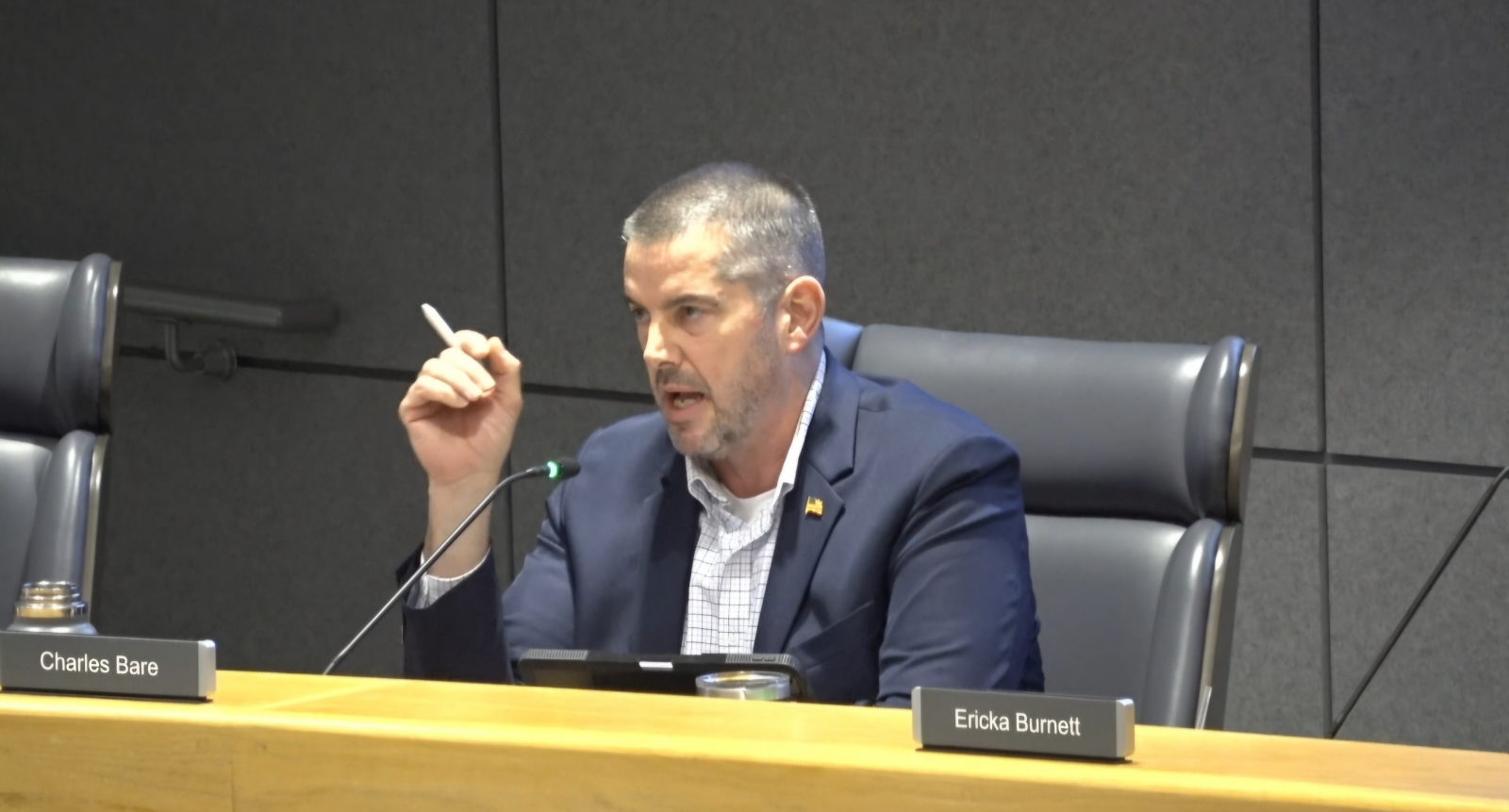 (Clipped from ECTV: Councilman Bare raises concerns on amendment 3)
The moment brought state tax politics straight into the city council chambers, highlighting growing anxiety among municipal leaders across Florida.
Amendment 3 seeks to fundamentally restructure Florida's property tax system.
The constitutional amendment would expand the non-school homestead tax exemption from the current $25,000 to $150,000 in 2027 and $250,000 in 2028.
It would also halve the cap on annual assessment increases for non-homestead properties, such as rentals and commercial buildings, reducing it from 10 percent to 5 percent.
Additionally, the amendment would place strict limits on how counties and municipalities can spend their remaining property tax revenue, restricting funds primarily to public safety, infrastructure, and core administration.
For homeowners, a yes vote represents significant relief on annual property taxes.
For local governments, however, it represents a statewide revenue loss projected at roughly $8.4 billion annually by 2028, forcing city councils to either slash public services or seek alternative revenue streams.
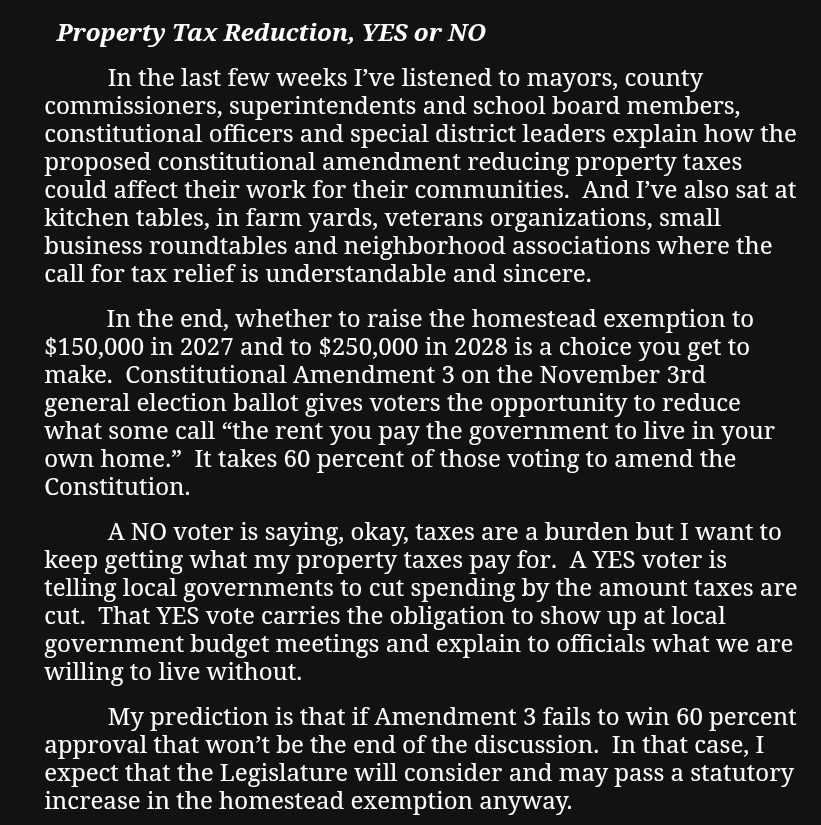 (Photo credit: Senator Don Gaetz' August 7 newsletter read by Councilman Bare)
Senator Gaetz acknowledged this heavy burden in his newsletter, writing that a yes vote "carries the obligation to show up at local government budget meetings and explain to officials what we are willing to live without."
The portion of the newsletter that alarmed Councilman Bare was the Senator's closing prediction regarding the power of the state legislature.
Senator Gaetz wrote: My prediction is that if Amendment 3 fails to win 60 percent approval that won’t be the end of the discussion. In that case, I expect that the Legislature will consider and may pass a statutory increase in the homestead exemption anyway.
The statement taps directly into a deeper question about democratic representation and the power of local governance.
If voters go to the ballot box and explicitly vote no on Amendment 3, a statutory override by Tallahassee raises serious questions about whether state lawmakers intend to represent the electorate's decision.
From one perspective, a threat to the democratic mandate appears evident.
If citizens vote against the amendment to protect funding for local police, fire departments, parks, and road maintenance, having the legislature enact a statutory version of the same tax cut undermines the ballot process.
This approach signals a scenario where the ballot initiative is treated as a mere formality rather than a binding directive from the public.
From another perspective, the statement reflects the reality of legislative authority.
A failed constitutional amendment does not automatically mean the public opposes tax relief.
 (Photo credit: Senator Gaetz' newsletter)
Because Florida requires a steep 60 percent supermajority to amend the state constitution, Amendment 3 could fail with 59 percent of voters approving it.
If a clear majority of Floridians support tax cuts, state lawmakers may view statutory relief as a fulfillment of their duty, as statutory changes require only a simple legislative majority without altering the constitution.
Regardless of whether Senator Gaetz's prediction is viewed as a subversion of voter intent or a realistic assessment of state politics, the underlying message for local leaders remains unchanged.
Whether Amendment 3 passes or fails on November 3rd, municipal governments must prepare for a future where local property tax revenues remain firmly in the crosshairs of state lawmakers.
Thumbnail photo credit: 850 Buisness Magazine
How impactful is this story?
Rate the real-world significance of this reporting.
Join the Conversation
Be the first to comment on this story.
Leave a Comment